
Repair, installation and leak response
Gas line repair and installation
A plumber isolates sections of the line under pressure to narrow down where it is losing air, then repairs the fault or runs new piping to a water heater, range, dryer or outdoor fixture, confirming every joint holds before anything is put back into service.
- Every connection pressure-tested before the line goes back into service
- Water heaters, ranges, dryers and outdoor fixtures
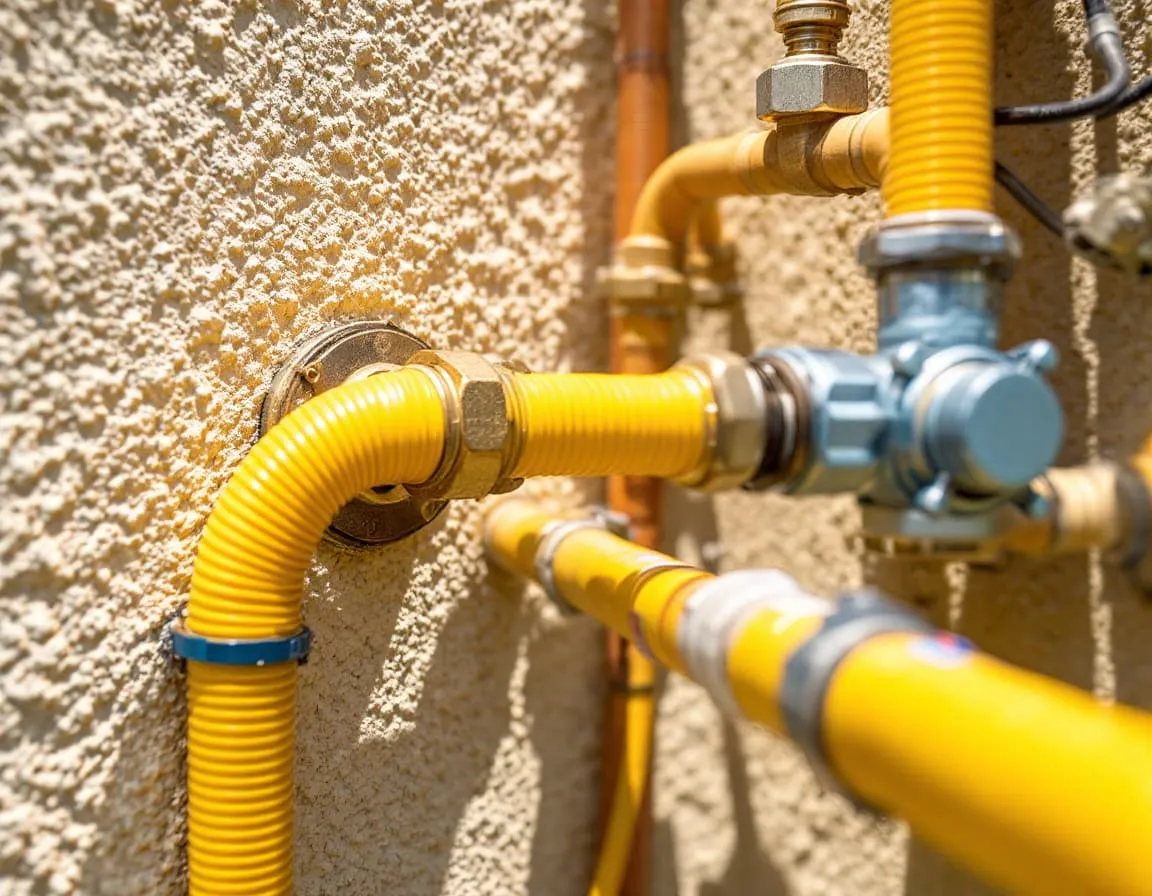
How do you know if you have a gas leak?
Natural gas is odorless on its own, so utilities add that unmistakable rotten-egg smell specifically so a leak gets noticed. That smell near an appliance connection or a buried outdoor line is the most reliable indicator, often joined by an audible hiss at a fitting, a patch of yard that has died back over a buried line, or a pilot flame that keeps going out for no reason. If you catch that smell anywhere in the house, get outside, skip the light switches on your way, and call once you are clear.
Once on-site, a plumber isolates the line under pressure to find exactly where it is losing air, which confirms the leak’s location precisely rather than relying on smell alone. The same test is used to sign off a newly installed line before any appliance is connected. Every joint the plumber touches, new or repaired, gets pressure-tested before the line goes back into service, so nothing is put back in use on an assumption.
Signs to watch for
What usually points to a gas line issue
None of these are worth sitting on. Call as soon as you notice one. Gas is the one category on this site where waiting is never the right call.
A sulfur or rotten-egg smell
Near an appliance, a meter, or along where a buried gas line runs.
A hissing sound near a connection
Audible near a gas valve, fitting or appliance connection.
A pilot light that will not stay lit
Repeated failures to keep a pilot light burning, without an obvious cause.
Dead grass over a buried line outdoors
A patch of dead or discolored vegetation tracing where a gas line runs underground.
A gas appliance that will not stay ignited
Repeated ignition failures on a range, dryer or water heater can point to a supply issue rather than the appliance itself.
A hissing sound near an outdoor connection
A grill, fire feature or other outdoor gas connection that hisses when open is treated with the same urgency as an indoor leak.
Questions
What people ask before booking
What should I do right now if I smell gas?
Leave the area, avoid light switches or open flames, and call from a safe distance rather than trying to find the leak yourself, since this is treated as an emergency call.
Do you install gas lines for new appliances?
Yes, running a new gas line to a range, dryer, outdoor grill or other fixture is common work, done to code and pressure-tested before use.
Is a permit required for gas line work?
Yes, gas line work in Tamarac is permitted through the city’s building department, and that is handled as part of the job.
How is a leak actually located?
A pressure test on the line identifies exactly where pressure is being lost, which is more precise than tracing a smell.
Can I turn the gas off myself before calling?
If you know where the main shutoff is and can reach it safely without re-entering a room where you smell gas, yes; otherwise leave that to the plumber once you are clear.
How is a new gas line sized for an appliance?
A plumber calculates the run based on the appliance’s demand and the distance from the meter, which determines the pipe diameter before anything is installed.
Smell gas, or need a new line run?
Call, and describe exactly what you are noticing
If you smell gas, leave the area and call from a safe distance, since this is treated as urgent. If you smell gas, get everyone out first and call once you are clear of the building.
No obligation. A suspected gas leak is dispatched the same way any emergency is.