
Same-day diagnosis and repair
Water heater repair when replacement is not the answer
A plumber checks the thermostat, heating element or pilot assembly, the fittings and connections, and the anode rod’s condition to find exactly what has failed before recommending a fix.
- Diagnosed before anything is replaced
- Tank and tankless units, gas and electric
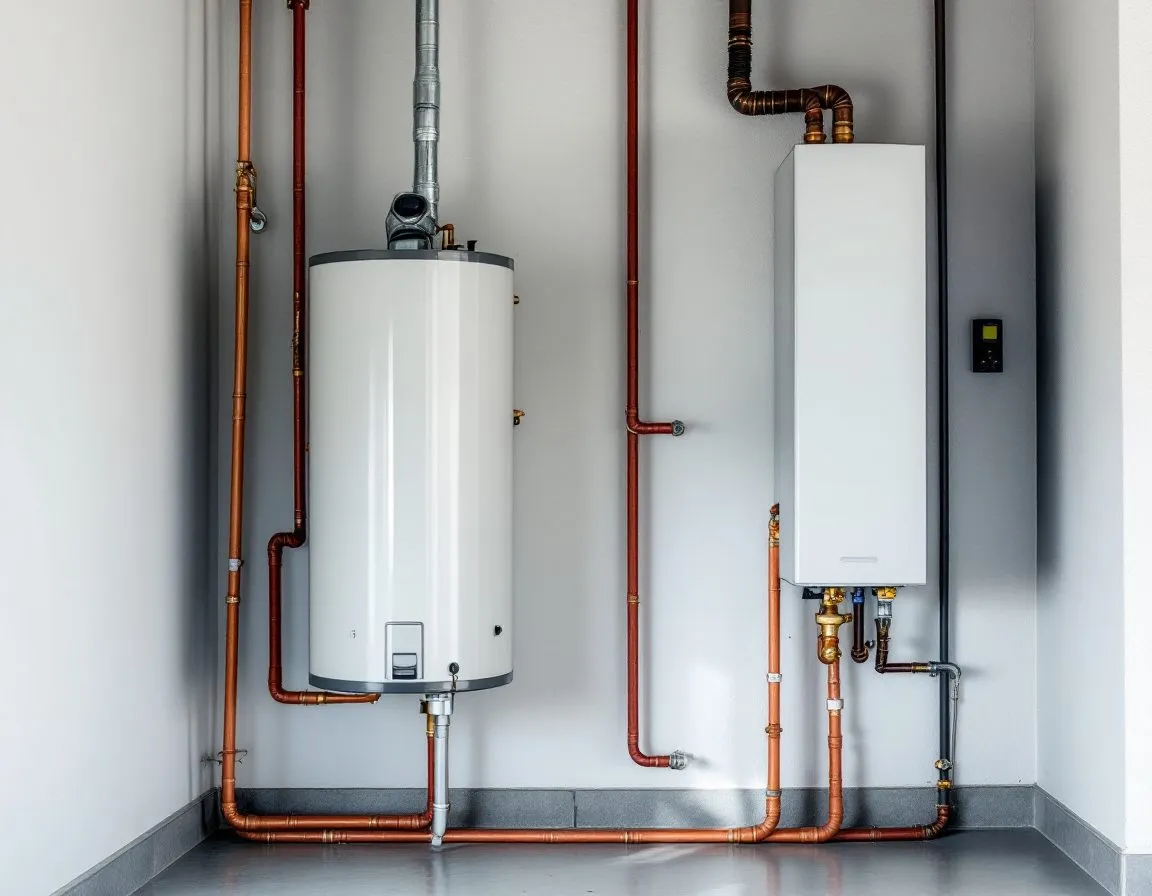
What usually causes a water heater to stop working?
On an electric unit, a burned-out heating element or a failed thermostat is the most common reason hot water disappears or never gets fully warm. On a gas unit, the usual culprit is a pilot flame that keeps dying out or a thermocouple that has quit sensing it properly. A leak, meanwhile, traces back to a fitting or valve rather than the tank itself far more often than not on a younger unit, and that kind of leak is a straightforward repair, not a reason to replace the whole thing.
Sediment build-up at the bottom of the tank is a slower-developing issue that shows up as rumbling noises and reduced efficiency over time rather than a sudden failure. A diagnosis on-site sorts out which of these is actually happening, on both tank and tankless units, before any part gets ordered or replaced. That visit also flags an anode rod nearing the end of its life.
Signs to watch for
What usually points to a repairable problem
These are common, repairable issues, not automatically a sign the tank needs replacing. A tank still within a reasonable service life is usually a better candidate for repair than replacement.
No hot water at all
Often a failed heating element, thermostat, or a pilot light that has gone out.
A leak at a fitting or valve
Water dripping from a connection point rather than from the tank body itself.
Water that is too hot or too cool
A thermostat that has drifted out of calibration or failed.
Rumbling or popping sounds
Sediment build-up at the bottom of the tank, common as a unit ages.
A tank that is noisy only when heating
Sediment settling at the bottom amplifies sound specifically during the heating cycle, distinct from a constant rumble.
The pilot or ignition failing intermittently
A pilot or electronic ignition that works sometimes and not others usually points to a specific failing component rather than a full unit replacement.
Questions
What people ask before booking
How do you know if it needs repair versus replacement?
A plumber checks the tank and its components on-site and tells you honestly which one it is: age, tank condition and the specific failure all factor in.
Can a tankless unit be repaired too?
Yes, tankless units have their own set of repairable components, and a plumber diagnoses those the same way.
How fast can someone come out for no hot water?
Same day in most cases, dispatched based on your location and what else is already in progress -- no hot water is treated as a real inconvenience worth prioritizing, not a routine appointment.
Is a leaking fitting urgent?
It is worth addressing quickly: even a small fitting leak can lead to water damage over time, so call and describe what you are seeing.
How often should the anode rod be checked?
It is a reasonable thing to have checked every couple of years, since a spent anode rod lets the tank itself start corroding instead, which shortens the tank’s life.
Is a rumbling tank dangerous to leave alone?
It is not typically an emergency, but the sediment behind the noise reduces efficiency and shortens the tank’s life, so it is worth scheduling rather than ignoring indefinitely.
No hot water?
Get it diagnosed before you replace anything
Most water heater problems are a repair, not a full replacement. A tank repaired once is not automatically due for another failure -- each visit is diagnosed on its own. Tell us the age of the unit if you know it, along with what it is doing.
No obligation. If you have no hot water at all, calling gets you a faster answer.