Mature trees along older lines
Neighborhoods planted in the 1970s and 1980s now have decades of root growth near the sewer lateral, which is the single most common cause of a recurring backup in this area.
Camera-confirmed, same-day dispatch
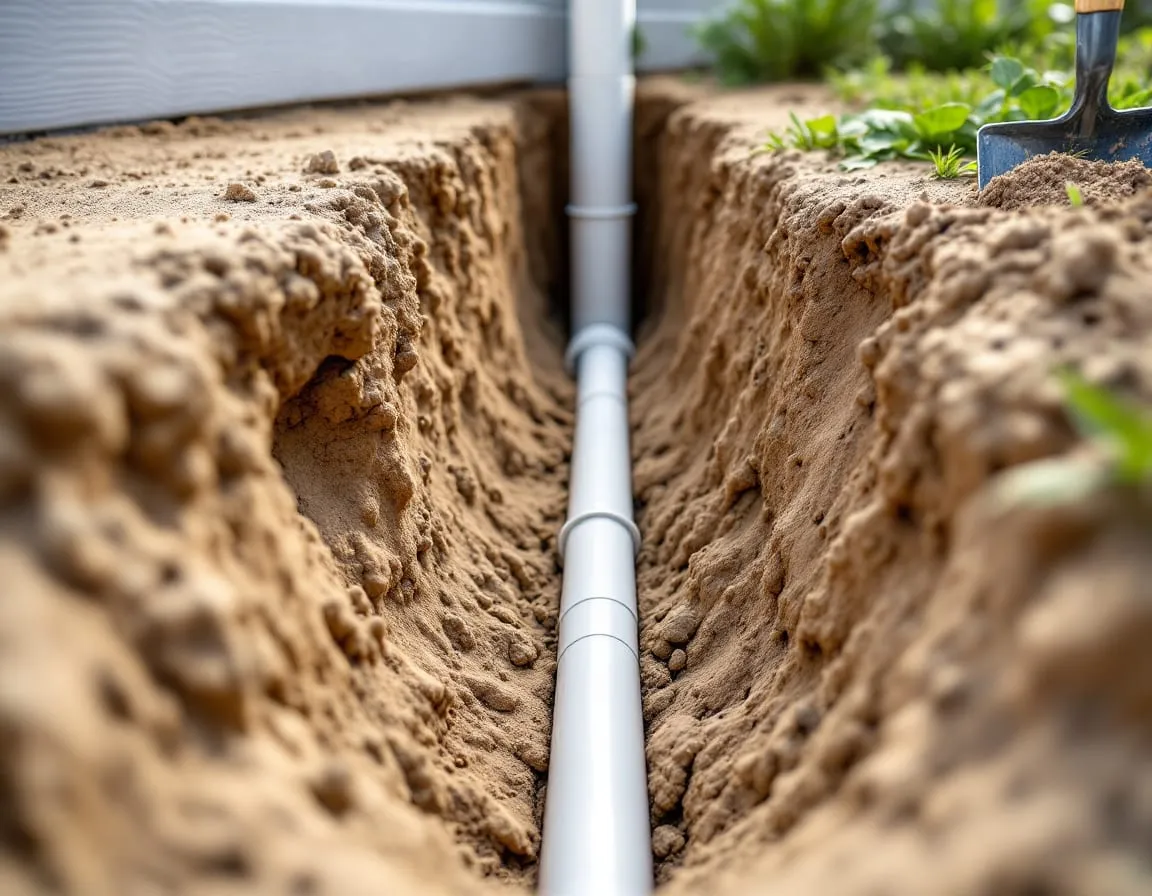
A camera goes down the main line first to show exactly where and why it has failed: a root intrusion, a break, a low spot or a joint that has separated, and the repair method is chosen based on what the camera actually finds.
What causes a main sewer line to back up?
A main sewer line usually backs up for one of four reasons: tree roots that have found a crack or joint and grown into the pipe, a section that has physically broken or collapsed, a low spot where the line sags and waste settles instead of flowing, or grease and debris that has built up over years to the point of blocking flow. Each looks similar from inside the house: multiple drains backing up at once. But each needs a different fix, which is why the camera goes down the line before any decision gets made about how to repair it.
Older sewer laterals, especially where the pipe material or the yard’s landscaping has changed over the decades, are more likely to have a joint issue than a newer line. Root intrusion in particular tends to repeat at the same spot once it starts, so confirming the exact location matters as much as confirming the cause.
Signs to watch for
The main line backing up shows up differently than a single clogged drain.
The lowest drains in the house, usually a tub or a floor drain, back up when another fixture, like a toilet, is used.
A toilet or drain gurgles on its own when water runs somewhere else in the house.
A section of lawn that stays wet or grows noticeably greener than the rest, often tracing the path of the line underneath.
The line clears with a snake but the same backup returns within a month or two.
Why this matters here
What Tamarac’s landscape and building history change about a sewer repair.
Neighborhoods planted in the 1970s and 1980s now have decades of root growth near the sewer lateral, which is the single most common cause of a recurring backup in this area.
A lot in a Tamarac neighborhood platted around a lake or waterway often has a higher water table, which changes how a broken or low section of pipe behaves and how repair excavation is planned.
Sewer lateral repair in Tamarac is permitted through the City of Tamarac’s building department, not unincorporated Broward County, and that applies whether the repair is open-trench or trenchless.
Questions
Not necessarily. Trenchless repair works from existing access points in many cases; a broken or badly offset section may still need to be dug up directly.
The camera inspection shows the cause directly: roots look different from a break or a low spot on camera, and the fix depends on which one it is.
Multiple drains backing up at once, especially near a toilet, usually should not wait. Call and describe what you are seeing.
Yes, sewer lateral work in Tamarac requires a permit through the city’s building department, which is handled as part of the job.
Multiple drains backing up?
A main line problem does not fix itself, and it rarely waits for a convenient time.
No obligation. Describe what you are seeing and we will tell you what it likely is.