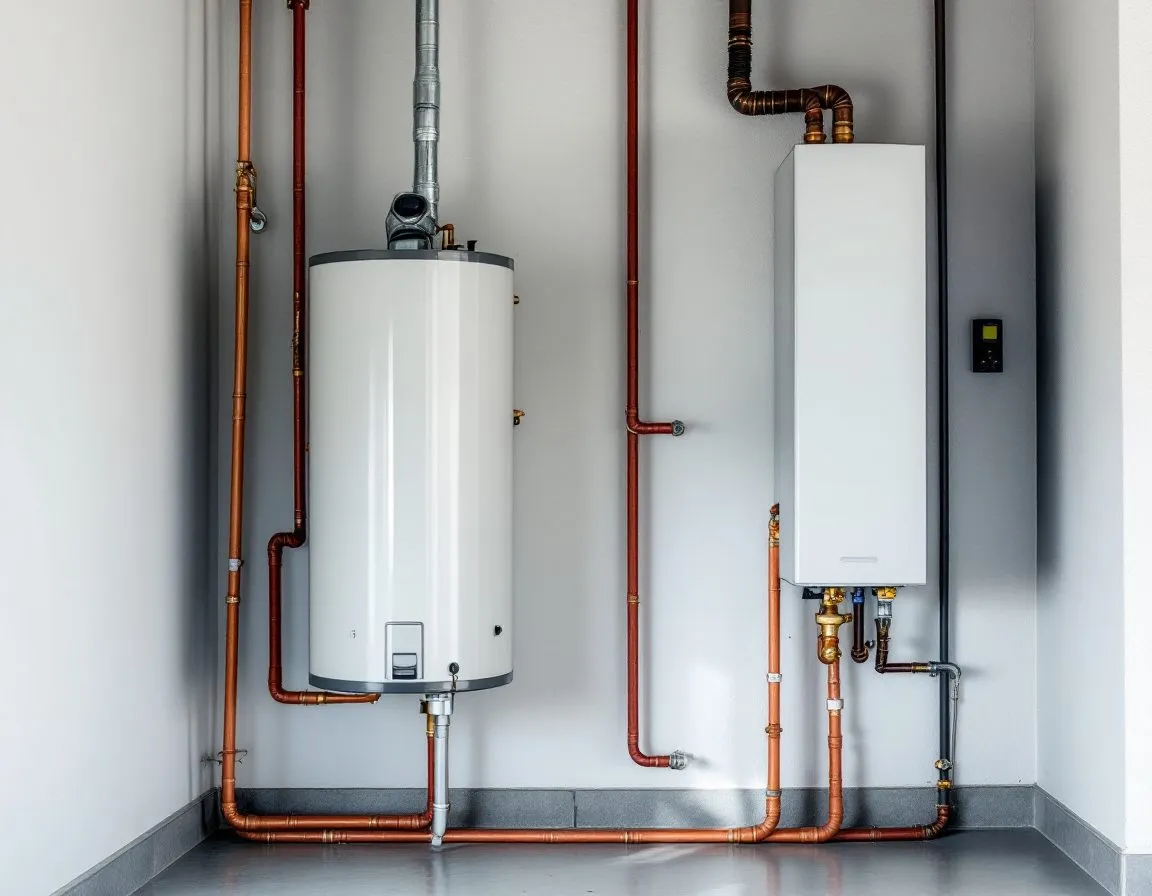
Tank and tankless, sized for the property

Water heater replacement, sized for your home and your household

A plumber checks the tank size against household demand, the existing gas or electric connection, and the space available before recommending a replacement: the pan, drain line and expansion tank are handled as part of the install, not left as an afterthought.

  • Tank and tankless both installed, whichever fits the property
  • Pan, drain line and expansion tank handled at install, not skipped

At what point does a water heater stop being worth repairing?

A water heater is usually worth replacing rather than repairing once it is leaking from the tank itself rather than a fitting, once it is past roughly ten to twelve years old and the anode rod has not been maintained, or once it can no longer keep up with what the household actually uses, cycling through hot water faster than it used to, or taking noticeably longer to reheat. A fitting leak, a faulty thermostat or a bad heating element are repairable on a younger unit; a tank that is rusting or weeping from a seam is not.

In a condo or a smaller home, the right size tank is not automatically the same size as the one being replaced: household size and how many bathrooms run at once matter more than matching what was there before, which is part of what gets checked before a replacement is recommended.

Signs to watch for

What a failing water heater usually looks like

A tank rarely fails without warning; these are the signs worth calling about.

  • Rusty or discolored hot water

    Water from the hot tap looks rusty or metallic, a sign the tank itself is corroding from the inside.

  • Water pooling at the base

    Moisture or standing water around the bottom of the tank, even a small amount.

  • Not enough hot water anymore

    The household runs out of hot water faster than it used to, even with the same usage pattern.

  • Unusual noises from the tank

    Rumbling, popping or knocking sounds, often a sign of sediment build-up inside an aging tank.

Why this matters here

Water heaters in Tamarac’s condos and single-family homes

What Tamarac’s mix of housing types changes about a replacement.

A large share of 55-and-over condo living

Tamarac is home to large 55-and-over communities such as Kings Point, built starting in the early 1980s, and water heaters in condo utility closets often have tighter clearances and different venting than a single-family garage install.

Single-story ranch homes from the 1970s growth era

Tamarac’s earlier neighborhoods are largely single-story homes from the city’s fast 1970s growth, typically with the water heater in a garage or a dedicated interior closet, straightforward access, but original plumbing connections that may need updating at replacement.

A permit applies either way

Water heater replacement in Tamarac is permitted through the city’s own building department, and that is handled as part of scheduling the install.

Questions

What people ask before booking

Tank or tankless: which is right for my house?

It depends on household size, existing gas or electric service, and available space. A plumber can walk through the trade-offs for your specific property.

Do you handle the permit?

Yes, water heater replacement in Tamarac requires a city permit and that is handled as part of the job.

What is the pan and expansion tank for?

The pan catches minor leaks before they reach the floor, and the expansion tank manages pressure changes as water heats, and both are part of a code-compliant install, not optional add-ons.

How long does a replacement take?

A straightforward tank swap is usually a same-day job; tankless conversions or unusual venting situations can take longer, which gets discussed before work starts.

Not sure if it needs replacing?

Get a straight answer before you decide

Describe what the tank is doing and how old it is, and we will tell you honestly whether it is a repair or a replacement.

No obligation. If it is actively leaking, calling now is faster than a form.

(954) 998-2343